Vilon

$50
Vilon: 20MG

Vilon Description

Vilon, a dipeptide composed of lysine and glutamic acid, exhibits multifaceted effects. In anti-aging, it delays cellular aging by improving gastrointestinal function, enhancing enzyme activity, and promoting nutrient absorption. It also boosts collagen expression in the skin to reduce signs of aging. In tissue repair and regeneration, Vilon supports stem cell activation and proliferation, accelerates wound healing, and aids in tissue repair (e.g., skin and intestinal tissues) by regulating fibroblast activity. Beneficial for cardiovascular and renal health, it improves cardiovascular function and regulates microvascular permeability in renal diseases. Additionally, Vilon shows potential applications in adjuvant therapy for liver diseases, diabetes, and radiation injuries, as well as in regulating overall bodily functions.

Peptide Information

Property Value
Peptide Sequence H-Lys-Glu-OH
Molecular Formula C11H21N3O5
Molecular Weight 275.30 g/mol
CAS Number 45234-02-4
PubChem CID 17010502
Synonyms lysylglutamic acid


Vilon Research

What is the research background of Vilon?

1. The Urgent Need for Research on Aging and Diseases

With the acceleration of the global population aging process, a series of issues related to aging, such as cellular senescence, decline in tissue function, and the high incidence of geriatric diseases, have become urgent medical problems to be solved. Cellular senescence is accompanied by the gradual loss of the ability to maintain homeostasis and repair damaged tissues, making it particularly crucial to find substances that can delay the process of cellular senescence and enhance tissue repair function.

At the same time, major diseases such as cancer, diabetes, cardiovascular diseases, and liver diseases seriously threaten human health. Traditional treatment methods have certain limitations in dealing with these diseases, and there is an urgent need to develop new treatment methods and drugs. For example, elderly cancer patients have poor tolerance to radiotherapy and chemotherapy, and the treatment effect is not satisfactory. It is urgent to find safe and effective adjuvant treatment methods. In such a difficult situation, scientists have turned their attention to bioactive peptides, hoping to find a breakthrough point, and the research on Vilon came into being.

2. The Vigorous Development of Research on Bioactive Peptides

Peptide substances widely exist in living organisms and participate in many key physiological processes, such as cell signaling, immune regulation, and metabolic regulation. In recent years, with the rapid development of technologies such as molecular biology and biochemistry, significant progress has been made in the research on bioactive peptides. 

Scientists can more precisely synthesize, isolate, and identify various peptides, and deeply explore their mechanisms of action. A large number of studies have shown that peptides with different structures have diverse biological activities, bringing new hope for solving health and disease problems. In this process, researchers have studied a large number of peptides through methods such as high-throughput screening and functional verification. Vilon, as a dipeptide with a unique structure and potential functions, has gradually come into people's view.

3. In-depth Exploration of the Mechanisms of Tissue Repair and Regeneration

Tissue repair and regeneration are important processes for maintaining the normal physiological functions of organisms and responding to injuries. However, there are still many gaps in the current understanding of this process, and how to promote more efficient tissue repair and regeneration has become the focus of research. Stem cells play a core role in tissue repair and regeneration, and the research on their activation, proliferation, and differentiation mechanisms has received much attention.

In addition, factors such as the synthesis and degradation of the extracellular matrix and intercellular signaling also have an important impact on tissue repair. In the process of exploring the mechanisms of tissue repair and regeneration, researchers have found that some peptides can regulate these key processes. Based on this, the research on peptides with the potential to regulate tissue repair and regeneration has been continuously deepened. Vilon has become a key research object in this field due to its potential effects in supporting stem cell activation and proliferation and regulating fibroblast activity.

What is the mechanism of action of Vilon?

1. Effects on Chromosomes and Gene Expression

Promoting the Unwinding of Heterochromatin: Studies have shown that Vilon can induce the unwinding (deheterochromatization) of the total heterochromatin in the cultured lymphocytes of the elderly[1]. This means that it can activate the synthesis process of ribosomal genes caused by the deheterochromatization of the nucleolar organizing region and release the genes that are inhibited due to the condensation of the euchromatin region to form facultative heterochromatin. At the same time, Vilon does not cause the unwinding of the constitutive heterochromatin around the centromere. The results show that Vilon will gradually activate facultative heterochromatin (deheterochromatization) with age [1].

2. Roles in Disease Treatment

Comprehensive Treatment for Cancer Patients: In the treatment of elderly cancer patients, Vilon is included in the treatment plan as an immunomodulator. Preliminary research results show that the application of Vilon can improve the 2-year survival rate of patients, prevent postoperative complications, distant complications, recurrence, and tumor spread, and improve the quality of life after active treatment[2].

Antitumor Effect: In vitro experiments, Vilon has a dose-dependent inhibitory effect on the growth of three types of tumor cells, namely human colorectal cancer LOVO, human gastric cancer MKN45, and human liver cancer QGY7703, but has no obvious inhibitory effect on human normal white blood cells [3]. In vivo tumor inhibition experiments show that Vilon has an inhibitory effect on the growth of mouse liver cancer H22, and the effective dose is 15mg・Kg-1. When the high dose of 30mg・Kg-1 is used, the tumor inhibition rate of the transplanted tumor liver cancer H22 in mice reaches more than 60%[3].

Effects on Diabetic Patients: In elderly type I diabetic patients, Vilon, as part of the comprehensive treatment, can optimize the coagulation and hemostasis function, manifested as an increase in the content of natural anticoagulants (antithrombin III and protein C) and the stimulation of fibrinolysis [4]. At the same time, in most cases, Vilon can also reduce the insulin dose required to stabilize carbohydrate metabolism. In addition, it can also reduce the content of T helper cells, T-dependent and non-T-dependent NK cells, normalize the levels of active T lymphocytes, B lymphocytes, and IgA, and has a stabilizing effect on the immune system and hemostasis function [4].

3. Effects on Cell and Organ Functions

Stimulating Hepatocyte Regeneration: In a rat model of liver cirrhosis induced by carbon tetrachloride poisoning, Vilon has a certain effect on the recovery of the functional activity of hepatocytes and the regeneration of the liver in rats with liver cirrhosis. Two weeks after the application of the drug, the activity of glucose-6-phosphatase (G6P) in the liver of rats with liver cirrhosis decreases, and Vilon can increase it. In the untreated rats, the content of total glycogen and its components and the activity of G6P are still at the pre-cirrhosis level. Throughout the experiment, the activities of glycogen phosphorylase (GP) and glycogen synthase (GS) in the liver of rats with liver cirrhosis in both groups have no difference from the control values. Vilon has a weak stimulating effect on the regeneration of the liver in rats with liver cirrhosis, manifested as the total protein content and ploidy level in the hepatocytes of the second group of rats being 4.7% and 11.5% higher than those of the first group respectively [5].

Effects on Radiosensitive Organs: Vilon stimulates the proliferative activity of thymocytes and enhances the proliferative potential of intestinal stem cells, thereby stimulating the post-radiation recovery of key organs. For example, studies on intact rats and rats that received a single whole-body gamma-ray irradiation (6Gy) have found that Vilon has an effect on the functional morphology of the thymus, spleen, and duodenum[6].

4. Roles at the Molecular Level

Possible Mechanism of Binding to the Membrane: Molecular dynamics trajectory studies have shown that both Vilon (lysylglutamic acid dipeptide) and thymopoietin (Glu-Trp) contain intramolecular salt bridges in their structures, reducing their conformational flexibility. Due to the aliphatic side chain of Lys, Vilon is relatively more flexible. A possible mechanism for the ligand-receptor binding of the dipeptide to the excitable membrane has been proposed, that is, binding through the nitrogen and oxygen atoms that form the salt bridge[7].

Effects on Protein Expression in the Nucleolar Organizing Region: Vilon stimulates and inhibits the expression of AIDS proteins in the nucleolar organizing regions of the serum tissue and epithelial cell nuclei, respectively forming or reducing the formation, assembly, and transport of ribosomes to the cytoplasm, thus determining the intensity of protein synthesis in these cells. In addition, this peptide also promotes the transformation of thymocytes into proliferating blast cells [8].

What are the applications of Vilon?

1. Anti-aging

Vilon is considered a potential anti-aging peptide that can delay cellular senescence by improving gastrointestinal function, enhancing enzyme activity, and promoting nutrient absorption. In addition, Vilon has also been found to be able to improve the expression of skin collagen and reduce the signs of skin aging. Studies have found that the peptide KE (Lys-Glu, Vilon) can increase the expression area of collagen 1 in the culture of senescent skin fibroblasts by 83%; it also increases the expression area of sirtuin 6 in the culture of young and old skin fibroblasts by 1.6 and 2.6 times respectively [11].

2. Tissue Repair and Regeneration

Vilon shows significant potential in tissue repair and regeneration. It can support the activation and proliferation of stem cells, accelerate wound healing and tissue repair. Studies have also found that Vilon may promote the repair of the skin, intestines, and other tissues by regulating fibroblast activity. Studies have shown that the synthetic dipeptide Vilon was added to the explant culture medium from rats of different ages. The results showed that Vilon could induce tissue morphological stability, activate the regeneration and functional activity of cells, and had a stronger effect on the explants of elderly rats, suggesting that Vilon has potential in tissue repair[9].

3. Cardiovascular and Renal Protection

Vilon also has a positive impact on cardiovascular and renal health. It can improve cardiovascular function by changing the gene expression pattern and enhance microvascular permeability in kidney diseases, promoting the optimization of blood coagulation.

4. Applications in Cancer Treatment

Comprehensive Treatment for Elderly Cancer Patients: In the treatment of elderly cancer patients, Vilon is included in the treatment plan as an immunomodulator. For example, in the comprehensive treatment of elderly patients with rectal cancer and colon cancer, preliminary research results show that the application of Vilon can improve the 2-year survival rate of patients, prevent postoperative complications, distant complications, recurrence, and tumor spread[2].

Patient Stratification for Multiple Cancers: The Variation of information fused Layers of Networks algorithm (ViLoN) adopted by Vilon is a new network-based method that can be used to integrate multiple molecular maps. In terms of patient stratification, this method has been verified on various combinations of data types (gene expression, methylation, copy number), and has a significant improvement effect on patient stratification, and has consistent competitiveness in all cases. In smaller cohorts (rectal adenocarcinoma: 90 cases, esophageal cancer: 180 cases), incorporating prior functional knowledge (KEGG, GO) is crucial for achieving good results[10].

5. Applications in the Treatment of Liver Diseases

Effects on the Liver of Rats with Liver Cirrhosis: The effects of the dipeptide preparation "Vilon" on the recovery of the functional activity of hepatocytes and the regeneration of the liver in rats with liver cirrhosis were studied. Rats with liver cirrhosis induced by carbon tetrachloride poisoning for 4 months were given Vilon (1.7 micrograms/kg) and injected daily for 5 days. The results showed that two weeks after the application of the drug, the activity of glucose-6-phosphatase (G6P), which was reduced by 1.2 times in liver cirrhosis, increased under the action of Vilon. Vilon has a weak stimulating effect on the regeneration of the liver in rats with liver cirrhosis, manifested as the total protein content and ploidy level in the hepatocytes of the second group of rats being 4.7% and 11.5% higher than those of the first group respectively [5].

6. Applications in the Treatment of Diabetes

Effects on Elderly Diabetic Patients: Vilon, as a thymic mimetic, is used as an adjuvant drug in the comprehensive treatment of elderly type I diabetic patients. The results show that the application of Vilon optimizes the coagulation and hemostasis function, manifested as an increase in the content of natural anticoagulants (antithrombin III and protein C) and the stimulation of fibrinolysis. In most cases, Vilon reduces the insulin dose required to stabilize carbohydrate metabolism. At the same time, Vilon also reduces the content of T helper cells, T-dependent and non-T-dependent NK cells, and normalizes the levels of active T lymphocytes, B lymphocytes, and IgA, indicating that Vilon has a stabilizing effect on the immune system and hemostasis function [4].

7. Applications in the Treatment of Radiation Injury

Effects on Radiosensitive Organs: The effects of vilon and epithalon on the functional morphology of the thymus, spleen, and duodenum of intact rats and rats that received a single whole-body γ-ray irradiation of 6Gy were studied. The results show that vilon stimulates the proliferative activity of thymocytes and enhances the proliferative potential of intestinal stem cells, thereby stimulating the post-radiation recovery of key organs[6].

In conclusion, as a special dipeptide, Vilon can improve gastrointestinal function, delay aging, assist in tissue repair and regeneration, and maintain cardiovascular and renal health. It also has a positive effect in the treatment of cancer, liver diseases, diabetes, and radiation injuries.

Relevant Citations

[1]   Lezhava T, Khavison V, Monaselidze J, et al. Bioregulator Vilon-induced reactivation of chromatin in cultured lymphocytes from  old people[J]. Biogerontology, 2004,5(2):73-79.DOI:10.1023/B:BGEN.0000025070.90330.7f.

[2]  Ias'Kevich L S, Krutilina N I, Kostetskaia T V, et al. Application of peptide bioregulator in complex treatment of elderly cancer patients.[J]. Advances in Gerontology = Uspekhi Gerontologii, 2005,16:97-100. https://pubmed.ncbi.nlm.nih.gov/16075684/.

[3]  Jun-hui C. Antitumor activity of Vilon dipeptide Lys-Glu[J]. Chinese Pharmacological Bulletin, 2007. https://api.semanticscholar.org/CorpusID:86988257.

[4]  Bi K, Nv I, Nn K, et al. Effect of vilon on the immunity status and coagulation hemostasis in patients of different age with diabetes mellitus[J]. Advances in Gerontology, 2007,20:106. https://pubmed.ncbi.nlm.nih.gov/18306698/.

[5]  Kudriavtseva M V, Bezborodkina N N, Sek E N, et al. Effect of "vilon" on cirrhotically changed rat liver. Liver regeneration, and status of glycogen-forming function of hepatocytes.[J]. Tsitologiia, 2000,42(8):758-764. https://pubmed.ncbi.nlm.nih.gov/11033862/.

[6]  Khavinson V K, Yuzhakov V V, Kvetnoi I M, et al. Immunohistochemical and morphometric analysis of effects of vilon and epithalon on functional morphology of radiosensitive organs[J]. Bulletin of Experimental Biology and Medicine, 2001,131(3):285-292.DOI:10.1023/A:1017676104877.

[7]  Shchegolev B F, Rogachevskii I V, Khavinson V K, et al. Molecular Mechanics Study of the Steric Structure of the Dipeptides Vilon and Thymogen[J]. Russian Journal of General Chemistry, 2003,73(12):1909-1913.DOI:10.1023/B:RUGC.0000025152.01400.52.

[8]  Raikhlin N T, Bukaeva I A, Smirnova E A, et al. Expression of argyrophilic proteins in the nucleolar organizer regions of human thymocytes and thymic epitheliocytes under conditions of coculturing with Vilon and Epithalon peptides[J]. Bulletin of Experimental Biology and Medicine, 2004,137(6):588-591.DOI:10.1023/B:BEBM.0000042720.40439.16.

[9]  Kniaz'Kin I V, Iuzhakov V V, Chalisova N I, et al. Functional morphology of organotypic culture of spleens from rats of various  ages exposed to vilon[J]. Advances in Gerontology, 2002,9:110-115. https://pubmed.ncbi.nlm.nih.gov/12096432/.

[10] Kańduła M M, Aldoshin A D, Singh S, et al. ViLoN-a multi-layer network approach to data integration demonstrated for patient  stratification[J]. Nucleic Acids Research, 2023,51(1):e6.DOI:10.1093/nar/gkac988.

[11]Fridman N V, Linkova N S, Polyakova V O, et al. Molecular Aspects of the Geroprotective Effect of Peptide KE in Human Skin Fibroblasts[J]. Advances in Gerontology, 2018,8(3):235-238.DOI:10.1134/S2079057018030050.

For Research Use Only
This compound is provided exclusively for in vitro laboratory research. It is not intended for human or animal consumption, diagnosis, treatment, or medical use. Not for dietary, cosmetic, or veterinary purposes. This product has not been evaluated by the U.S. Food and Drug Administration or any other regulatory authority.


Disclaimer
All information is for educational purposes only. Humatide makes no claims regarding efficacy or safety. Purchasers are responsible for ensuring proper handling and use in compliance with all applicable laws and regulations.


Terms of Sale
By purchasing from Humatide, you confirm that you are a qualified researcher with the knowledge and facilities to safely handle and store research chemicals. All sales are final. Humatide assumes no liability for misuse, misrepresentation, or unintended consequences arising from the use of this product.

ALL ARTICLES AND PRODUCT INFORMATION PROVIDED ON THIS WEBSITE ARE SOLELY FOR INFORMATION DISSEMINATION AND EDUCATIONAL PURPOSES.

The products provided on this website are intended exclusively for in vitro research. In vitro research (Latin: *in glass*, meaning in glassware) is conducted outside the human body. These products are not pharmaceuticals, have not been approved by the U.S. Food and Drug Administration (FDA), and must not be used to prevent, treat, or cure any medical condition, disease, or ailment. It is strictly prohibited by law to introduce these products into the human or animal body in any form.


Polypeptide Purity Control and Verification Technical System

Humatide.com provides peptides with purity exceeding 99%. Humatide achieves precise control and scientific verification of polypeptide purity by integrating advanced technologies and a full-process quality control system: In the synthesis stage, automated solid-phase peptide synthesis (SPPS) is employed to accurately assemble amino acid sequences. A gradient purification strategy ranging from medium-pressure liquid chromatography (MPLC) to preparative high-performance liquid chromatography (Prep-HPLC) is utilized, optimizing mobile phase composition and elution conditions based on the physicochemical properties of the target peptide (hydrophobicity, charge distribution, etc.) to efficiently remove impurities. For purity detection, reverse-phase high-performance liquid chromatography (RP-HPLC) serves as the core technique, separating components through the distribution difference of molecules between the stationary phase (hydrophobic packing) and the mobile phase (polar solvent). Purity is determined via retention time matching and peak area normalization. Meanwhile, electrospray ionization mass spectrometry (ESI-MS) is combined to precisely verify the molecular weight and composition through mass-to-charge ratio (m/z) analysis, eliminating structurally heterogeneous impurities. Quality management covers the entire chain from raw material acceptance, synthesis process monitoring to finished product release. A continuous quality fingerprint is constructed using multi-dimensional indicators (HPLC purity, MS molecular weight, solvent residue, etc.), and batch data traceability is achieved through a laboratory information management system (LIMS), ensuring each batch meets the prespecified purity standards. This system provides a reliable technical guarantee for preparing high-purity polypeptides through the organic integration of process optimization, multi-dimensional detection, and full-process quality control.


Concepts of High-Performance Liquid Chromatography (HPLC) and Mass Spectrometry (MS)

High-performance liquid chromatography (HPLC) is a separation technology widely used by Humatide for peptide purification. Driven by a high-pressure pump, the mobile phase carries samples through a chromatographic column packed with a specific stationary phase, achieving separation based on differences in the distribution coefficients of components between the two phases. It features high separation efficiency, fast analysis speed, and strong detection sensitivity, enabling precise capture of subtle differences between target peptides and impurities such as sequence analogs or deletion peptides.

Mass spectrometry (MS) is an analytical method that converts peptide molecules into gas-phase ions through ionization technology and separates/detects ions based on their mass-to-charge ratio (m/z). It can accurately determine the molecular weight of peptides and infer amino acid sequences through fragment ion information, serving as a key technology for verifying peptide structural correctness. The combination of these two techniques allows Humatide to establish a complete quality control system from both purity separation and structural confirmation perspectives. Both methods are high-precision peptide detection technologies that scientifically demonstrate the purity and composition of peptides ordered from Humatide.com.

Humatide is committed to translating cutting-edge analytical technologies into tangible quality assurance. Our peptide synthesis laboratories are equipped with high-resolution mass spectrometers and ultra-high-performance liquid chromatography systems. Through real-time detection and data comparison of samples at each production stage, we continuously optimize synthesis processes to ensure every peptide product is delivered to customers with exceptional purity.


Recommended Peptide Purity Levels

Humatide provides only the highest-purity peptides (purity ≥99%) for research and development. The minimum recommended peptide purity level for specific applications depends on the application:

• In biochemical research, peptides used for enzyme activity analysis typically require ≥85% purity.

• In drug development, peptides for preclinical trials must meet >98% high-purity standards to ensure biological activity and safety.

• For diagnostic applications (e.g., antigen peptides in immunoassays), recommended purity is 90%-95% to guarantee detection specificity and sensitivity.

Humatide is confident in the quality of all our products, implementing strict quality monitoring at every stage of peptide synthesis—from crude peptide purification to final product release. Through multi-step purification and verification processes, we ensure each batch meets or exceeds the purity requirements for specific applications. Examples of acceptable minimum purity levels are as follows:


High Purity (>95%)

• Polypeptide drug research and production

• Preparation of targeted therapeutic drugs

• Raw materials for biological diagnostic reagents (e.g., ELISA, immunoassay kits)

• Development of polypeptide vaccines (therapeutic/preventive)

• Preparation of targeting peptides for antibody-drug conjugates (ADCs)

• Polypeptide reagents for life science research (e.g., receptor agonists/antagonists)

• Research on targeting peptide modification for gene therapy vectors

• Development of polypeptide antibiotics/antimicrobial peptides

• Preparation of polypeptide hormone analogs (e.g., insulin analogs)

• Reference standards for biomarker detection

• Research on cell culture additives

• Synthetic peptides for protein structure analysis and functional studies


Moderate Purity (>85%)

• Early-stage activity screening in polypeptide drug research

• Peptide additives for industrial enzymes

• Signal peptide raw materials

• Surface modification of biomaterials (e.g., medical catheters, tissue engineering scaffolds)

• Preparation of agricultural antimicrobial peptides

• Cell adhesion research

• Raw materials for polypeptide surfactants/detergents

• Polypeptide reagents for preliminary mechanistic research in scientific studies


Lower Purity (>70%)

• Preliminary structure-activity relationship (SAR) studies

• Initial verification of protein binding

• Primary cytotoxicity screening

• High-throughput screening of polypeptide drug lead compounds


Please note

**We are not responsible for reconstitution or any issue that arise from it**


High-purity polypeptides are suitable for scenarios requiring strict purity. The ultra-high-purity peptides provided by Humatide can meet and exceed all prespecified purity standards.

Humatide Shipping & Delivery

Shipping Methods & Delivery Times

Standard handling is 24 hours excluding Holidays and Weekends

International Shipping – Not available at this time.

The explained transit time are not guaranteed.  Humatide is not responsible nor will refunds be given due to transit delays.

Order Tracking

Once your order has shipped, you’ll receive an email with a tracking number and link.
If you experience any tracking issues, reach out to us at help@humatide.com.

Shipping Issues

If your order arrives damaged, incorrect, or incomplete, contact us within 48 hours of delivery at help@humatide.com.  Please have photos available to expedite inquires.  We’ll make it right with a replacement or refund.

Carrier Delays

Humatide is not responsible for delivery delays caused by:

  • Severe weather
  • Carrier errors
  • Events outside our control
  • Extended transit times in rural areas
  • Holidays

Address Accuracy

Please double-check your shipping address during checkout.
We are not responsible for orders delayed or lost due to incomplete or incorrect addresses.

Delivery Confirmation

If tracking shows your package as delivered but you haven’t received it:

Contact UPS directly.

We’re happy to assist with a carrier claim, but Humatide is not liable for lost or stolen packages after confirmed delivery.

Returns & Exchanges

Refund Policy
Due to the sensitive nature of research products, all sales are final.
We cannot accept returns or issue refunds once an order has been shipped. This policy helps ensure product integrity and safety for all of our research partners.

Damaged or Defective Items

If your order is damaged and you declined shipping protection we can only provide you with up to $100 in store credit.  If you did select shipment protection we will replace any damaged good and ship out replacements at no cost.  If your order is incorrect, or missing items, please contact us within 48 hours of delivery so we can resolve the issue.  Please provide photos of the damaged items.

Lost or Stolen Shipments

If your order is lost or stolen and you declined shipping protection the maximum credit we can give you is $100 in store credit.  If you did select shipment protection we will replace the entire order if it's been lost at no charge if it is lost or stolen.  Please contact us within 48 hours of delivery so we can work with UPS to help resolve the issue.  

Final Sale Items

All sales are final and products are not eligible for return or exchange. 

Need Help?

We’re here to help.
Contact our support team anytime at help@humatide.com with any questions about shipping or returns.

To View the latest Certificate of Analysis (CoA) click the "View Latest 3rd Party Certificate of Analysis" button on the product page.  Please use that if you are looking to buy as that is the batch you'll receive if you place an order.  The QRCode will give you the Batch ID/Lot Number which is matched on the CoA to validate that CoA matches your specific vial.  If you happen to get a vial that is from a previous batch select the "Previous Batch 3rd Party Certificate of Analysis" if your Batch ID doesn't match the latest CoA.   

All CoA are searchable via the respective testers' website. 

ILS Labs Verification is available on their website at:  

https://ils-lab.com/verify

To validate the CoA on the ILS Labs website enter the Access Code that is located on the bottom of the CoA that is shown on our website.   

We also use MDx Biolabs, verification is available via their website at:  

https://mdxbiolabs.com/certificates-of-analysis

To find validate the CoA on the MDx Biolabs website enter the COA number which is located at the bottom of the CoA that is shown on our website.  
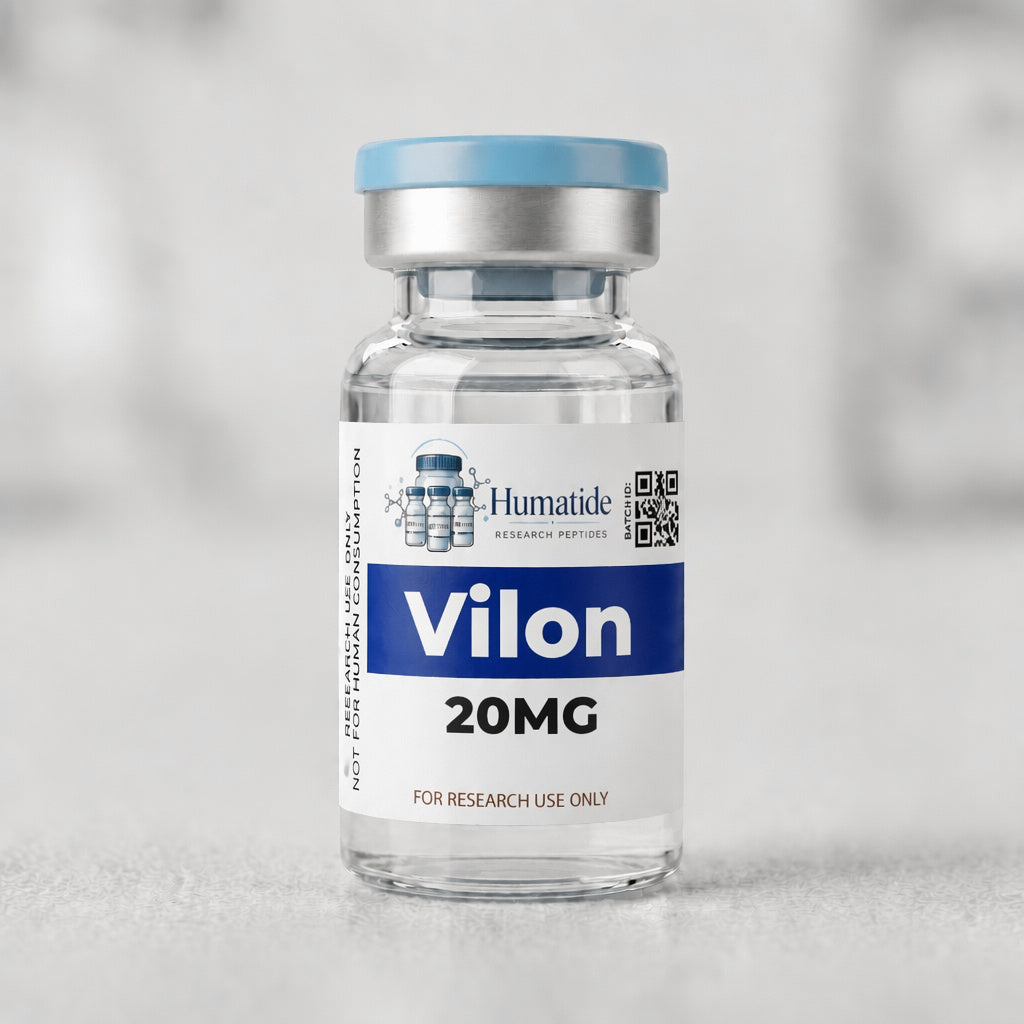


Vilon
Vilon
20MG
$50

Recently viewed