Be the first to write a review
0%
(0)
0%
(0)
0%
(0)
0%
(0)
0%
(0)
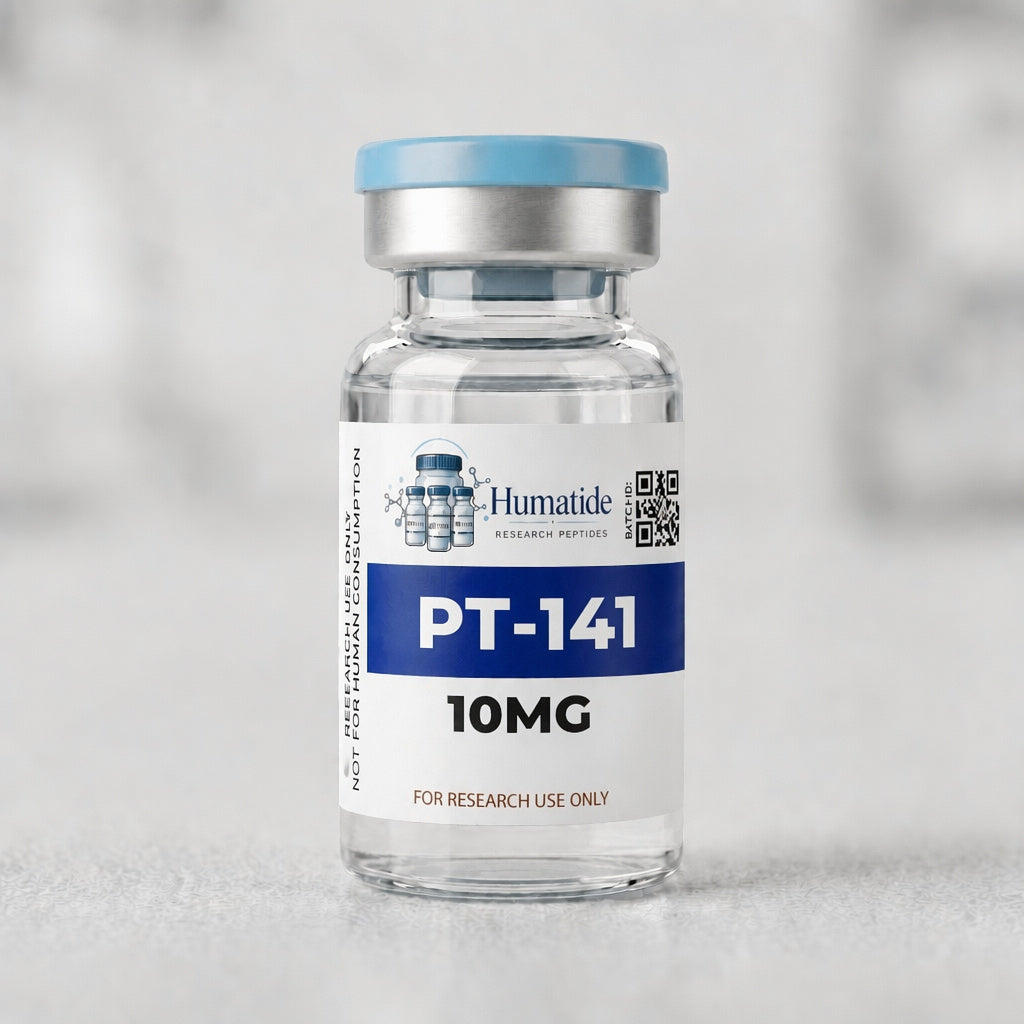
PT 141 (Bremelanotide) is a synthetic cyclic heptapeptide melanocortin receptor agonist derived from α-MSH. It acts on sexual dysfunction by activating central MC3R/MC4R pathways. For males, it improves erectile function through corpus cavernosum smooth muscle relaxation. For females, it enhances sexual desire via CNS-mediated regulation of libido. Its mechanism circumvents traditional PDE5-inhibitor pathways, making it effective for PDE5-resistant cases. PT 141 has demonstrated rapid onset of action within minutes post-administration. Preclinical and clinical evaluations have shown it to be well-tolerated overall.
| Property | Value |
|---|---|
| Peptide Sequence |
Ac-Nle-Asp(1)-His-D-Phe-Arg-Trp-Lys(1)-OH
|
| Molecular Formula | C50H68N14O10 |
| Molecular Weight | 1025.2 g/mol |
| CAS Number | 189691-06-3 |
| PubChem CID | 9941379 |
| Synonyms | Bremelanotide |
PT 141 Research
What is the research background of PT 141?
PT 141 is a synthetic peptide analog and an agonist of melanocortin receptors, mainly including MC3R and MC4R, which are predominantly expressed in the central nervous system [1].The discovery of PT 141 has brought new hope for the treatment of sexual dysfunction. Early studies on it indicated that administering PT 141 to rats and non-human primates led to penile erections. After systemic administration to rats, the activation of neurons in the hypothalamus was demonstrated by an increase in c-Fos immunoreactivity. Neurons in the same region of the central nervous system would take up the pseudorabies virus injected into the corpus cavernosum of the rat penis[1] .PT 141 has the potential to treat sexual dysfunction. Studies have shown that after administering PT 141 to normal men and patients with erectile dysfunction, there was a rapid and dose-dependent increase in erectile activity. These results suggest that PT 141 has great potential as a new treatment for sexual dysfunction [1].
What is the mechanism by which PT 141 acts on melanocortin receptors?
The specific mechanism by which PT 141 (Bremelanotide) acts on melanocortin receptors is rather complex, and the following is a detailed elaboration of its mechanism:
The melanocortin receptor system consists of melanocortin peptides, unique receptors, accessory proteins, and endogenous antagonists. Melanocortin peptides are small peptide hormones that have been studied under various physiological and pathological conditions. Currently, there are five known types of melanocortin receptors, which are distributed in the central nervous system and some peripheral tissues. G protein-coupled melanocortin receptors usually transmit signals through adenylate cyclase and other downstream signaling pathways. Depending on the ligand, surface expression of the melanocortin receptor, receptor occupancy time, associated proteins, cell type, and other parameters, the signaling pathways are complex and pleiotropic. Although all five melanocortin receptors are coupled to Gs, they can occasionally also be coupled to Gq or Gi [2].
Binding of PT 141 to melanocortin receptors:
PT 141 is a peptide analog. As a melanocortin receptor agonist, it can bind to central melanocortin receptors. PT 141, as a synthetic peptide analog of α-melanocyte-stimulating hormone, is an agonist of melanocortin receptors including MC3R and MC4R, which are mainly expressed in the central nervous system[1] .
Effects on female rats:
In female rats, PT 141 selectively stimulates courtship behavior without affecting lordosis, rhythm, or other sexual behaviors. PT 141 does not cause systemic motor activation and does not affect the perception of sexual rewards. This indicates that the central melanocortin system is important in regulating female sexual desire. The selective pharmacological effect on the appetitive sexual behavior of female rats has never been reported before, which also makes PT 141 potentially the first identified drug capable of treating female sexual desire disorders [3].
Effects on rats and non-human primates: Administration of PT 141 to rats and non-human primates leads to penile erections. Systemic administration of PT 141 activates neurons in the hypothalamus of rats, manifested as an increase in c-Fos immunoreactivity. Neurons in the same region of the hypothalamus will take up the pseudorabies virus injected into the corpus cavernosum of the rat penis [3].
Effects on human males:
Administration of PT 141 to normal men and patients with erectile dysfunction leads to a rapid and dose-dependent increase in erectile activity. The results suggest that PT 141 is expected to become a new treatment for sexual dysfunction [3].
Effects on human females: In premenopausal women with sexual arousal disorder, after a single-dose intranasal administration of Bremelanotide (i.e., PT 141), more women reported moderate or high levels of sexual desire. Compared with the placebo, there was a more obvious trend of positive responses regarding the feelings of genital arousal after Bremelanotide treatment. Among the women who attempted sexual intercourse within 24 hours after treatment, significantly more women were more satisfied with the level of sexual arousal after using Bremelanotide compared with the placebo. However, after the administration of Bremelanotide, there was no significant change in vaginal vasocongestion when watching pornographic videos [4].
In conclusion, as a melanocortin receptor agonist, PT 141, by binding to melanocortin receptors, produces various physiological effects in animal models and humans, especially playing an important role in regulating sexual function.
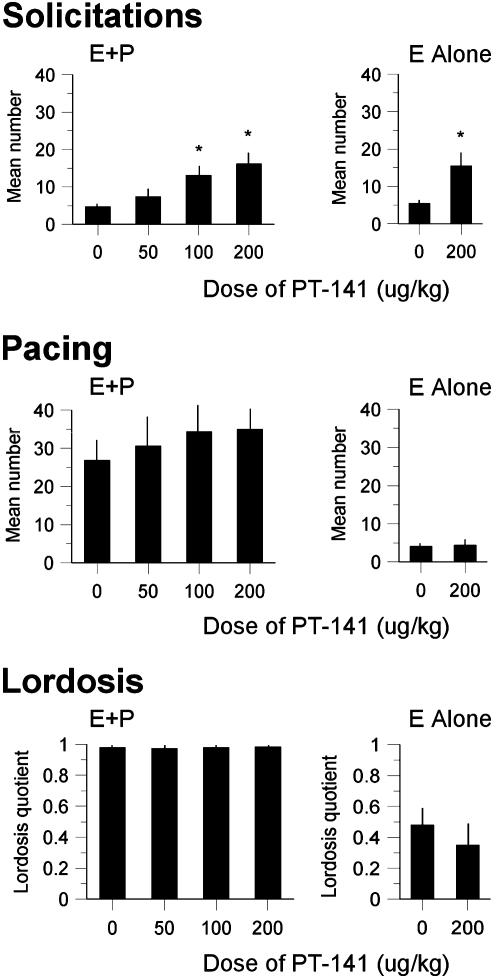
Dose–response effects of PT-141 on sexual behavior in bilevel chambers. (Top) Effects on solicitations in females primed with estrogen and progesterone (EP) or estrogen alone (E alone). Post hoc tests revealed that both the 100- and 200-g/kg doses increased the number of solicitations significantly compared to saline-treated controls (P values<0.05). (Middle) Effects on pacing in females primed with EP or E alone. (Bottom) Effects on lordosis quotients in females primed with EP or E alone. Data are means SEM. *, P <0.05 from control.
Source:PubMed[3]
What are the specific potential benefits of PT 141 for male low sexual desire and erectile difficulties?
Improvement of erectile function:
Numerous studies have shown that PT 141 has a certain therapeutic effect on male erectile dysfunction. For example, in some clinical trials, it was found to be able to induce penile erections[5] (Shadiack A M, 2007). In a Phase IIb study of male diabetic patients with erectile dysfunction, the patients were randomly assigned to receive placebo or different doses of PT 141. The results showed that in the groups with higher doses of PT 141 (12.5mg and 15mg), there was a significant improvement in the Erectile Function (EF) domain of the International Index of Erectile Function (IIEF), with a clear difference compared to the placebo group[5] .
The mechanism by which PT 141 improves erectile function may be related to its role as a melanocortinergic drug, binding to melanocortin receptors in the central nervous system, especially in the hypothalamus. This binding may regulate the neural pathways related to erection, thus promoting penile erection[5] .
Good tolerability and safety:
According to the clinical experience of Bremelanotide, the administration of melanocortin agonists (such as Bremelanotide) is well tolerated [6]. It is not associated with the hypotension observed with the current phosphodiesterase-5 inhibitors used for the treatment of erectile dysfunction.
Clinical effect studies:
Evaluation in healthy male subjects and patients with erectile dysfunction:
After subcutaneous administration in healthy male subjects and patients with erectile dysfunction (ED) who reported insufficient response to Viagra, the cyclic heptapeptide melanocortin analog PT 141 was evaluated [7](Rosen R C, 2004). Doses ranging from 0.3 to 10 mg were administered to healthy male subjects, and doses greater than 1.0 mg produced a statistically significant erectile response. ED patients received placebo, 4 or 6mg PT 141 in a crossover design in the presence of visual sexual stimulation (VSS). At both doses, the erectile response induced by PT 141 was statistically significant. PT 141 was safe and well tolerated in both studies. In patients who did not have an adequate response to PDE5 inhibitors, the erectile potential, tolerability, and ability of PT 141 to cause significant erections suggest that PT 141 may provide another treatment option for ED for a potentially wide range of patients.
Effect of combination with sildenafil:
Nineteen erectile dysfunction patients who self-reported a response to Viagra or Levitra were given 25mg sildenafil and 7.5mg intranasal PT 141, 25mg sildenafil and intranasal placebo spray, and placebo tablets and intranasal placebo spray in a randomized crossover design [8](Diamond L E, 2005). The erectile response to two 30-minute visual sexual stimulations was evaluated by RigiScan. The results showed that the erectile response induced by the combination of PT 141 and sildenafil was significantly greater than that induced by sildenafil alone. The combination was safe and well tolerated, without causing new adverse events or an increase in the frequency or severity of adverse events. The conclusion is that the combination of intranasal PT 141 and phosphodiesterase 5 inhibitors may provide a treatment option for patients who are ineffective or have poor tolerance at higher doses of monotherapy.
The use of PT 141 is of great significance in many aspects, especially bringing new hope to numerous patients in the field of sexual health. For premenopausal women suffering from acquired and generalized hypoactive sexual desire disorder (HSDD), PT 141 is a major breakthrough. Previously, such patients often endured the psychological pressure caused by low sexual desire in their daily lives, which severely affected their emotional state and intimate relationships with their partners. The emergence of PT 141 has changed this situation. By regulating the pathways in the brain involved in the sexual response, it significantly improves the sexual desire of patients. Clinical research data show that after using Bremelanotide, there are obvious differences in the average changes of the Female Sexual Function Index - Desire domain (FSFI-D) and the 13th item score of the Female Sexual Distress Scale - Desire/Arousal/Orgasm (FSDS-DAO) from the baseline to the end of the study (EOS).
This intuitively reflects its positive effects in enhancing patients' sexual desire and alleviating related distress, greatly improving the quality of life of premenopausal women with HSDD and helping them regain confidence and the joy of life.
Moreover, PT 141 also shows potential positive effects on male sexual dysfunction. In terms of improving male low sexual desire, many patients reported a significant increase after using it, being able to regain their interest in sexual activity. And regarding erectile difficulties, some patients' erectile function has been improved to a certain extent after use, enhancing the effect of penile erection, enabling them to complete sexual behavior more smoothly in sexual life and improving their sexual experience.
This undoubtedly relieves the physical and mental burden for the male group that has been troubled by sexual dysfunction for a long time, repairs the psychological trauma caused by sexual function problems, and also helps to maintain the harmony and stability of family relationships.
From a macroscopic perspective of medical research, the use of PT 141 provides valuable practical evidence for in-depth exploration of the mechanisms related to human sexual health.
The research process of its mechanism of action has prompted researchers to conduct more in-depth explorations of the neural pathways in the brain related to the sexual response, melanocortin receptors, etc., promoting the progress of basic research in the field of sexual health, laying the foundation for the development of more treatment methods and drugs for sexual dysfunction, further enriching the medical treasury, and taking a solid step forward for medicine in overcoming the challenges of sexual health problems.
For Research Use Only
This compound is provided exclusively for in vitro laboratory research. It is not intended for human or animal consumption, diagnosis, treatment, or medical use. Not for dietary, cosmetic, or veterinary purposes. This product has not been evaluated by the U.S. Food and Drug Administration or any other regulatory authority.
Disclaimer
All information is for educational purposes only. Humatide makes no claims regarding efficacy or safety. Purchasers are responsible for ensuring proper handling and use in compliance with all applicable laws and regulations.
Terms of Sale
By purchasing from Humatide, you confirm that you are a qualified researcher with the knowledge and facilities to safely handle and store research chemicals. All sales are final. Humatide assumes no liability for misuse, misrepresentation, or unintended consequences arising from the use of this product.
ALL ARTICLES AND PRODUCT INFORMATION PROVIDED ON THIS WEBSITE ARE SOLELY FOR INFORMATION DISSEMINATION AND EDUCATIONAL PURPOSES.
The products provided on this website are intended exclusively for in vitro research. In vitro research (Latin: *in glass*, meaning in glassware) is conducted outside the human body. These products are not pharmaceuticals, have not been approved by the U.S. Food and Drug Administration (FDA), and must not be used to prevent, treat, or cure any medical condition, disease, or ailment. It is strictly prohibited by law to introduce these products into the human or animal body in any form.
Polypeptide Purity Control and Verification Technical System
Humatide.com provides peptides with purity exceeding 99%. Humatide achieves precise control and scientific verification of polypeptide purity by integrating advanced technologies and a full-process quality control system: In the synthesis stage, automated solid-phase peptide synthesis (SPPS) is employed to accurately assemble amino acid sequences. A gradient purification strategy ranging from medium-pressure liquid chromatography (MPLC) to preparative high-performance liquid chromatography (Prep-HPLC) is utilized, optimizing mobile phase composition and elution conditions based on the physicochemical properties of the target peptide (hydrophobicity, charge distribution, etc.) to efficiently remove impurities. For purity detection, reverse-phase high-performance liquid chromatography (RP-HPLC) serves as the core technique, separating components through the distribution difference of molecules between the stationary phase (hydrophobic packing) and the mobile phase (polar solvent). Purity is determined via retention time matching and peak area normalization. Meanwhile, electrospray ionization mass spectrometry (ESI-MS) is combined to precisely verify the molecular weight and composition through mass-to-charge ratio (m/z) analysis, eliminating structurally heterogeneous impurities. Quality management covers the entire chain from raw material acceptance, synthesis process monitoring to finished product release. A continuous quality fingerprint is constructed using multi-dimensional indicators (HPLC purity, MS molecular weight, solvent residue, etc.), and batch data traceability is achieved through a laboratory information management system (LIMS), ensuring each batch meets the prespecified purity standards. This system provides a reliable technical guarantee for preparing high-purity polypeptides through the organic integration of process optimization, multi-dimensional detection, and full-process quality control.
Concepts of High-Performance Liquid Chromatography (HPLC) and Mass Spectrometry (MS)
High-performance liquid chromatography (HPLC) is a separation technology widely used by Humatide for peptide purification. Driven by a high-pressure pump, the mobile phase carries samples through a chromatographic column packed with a specific stationary phase, achieving separation based on differences in the distribution coefficients of components between the two phases. It features high separation efficiency, fast analysis speed, and strong detection sensitivity, enabling precise capture of subtle differences between target peptides and impurities such as sequence analogs or deletion peptides.
Mass spectrometry (MS) is an analytical method that converts peptide molecules into gas-phase ions through ionization technology and separates/detects ions based on their mass-to-charge ratio (m/z). It can accurately determine the molecular weight of peptides and infer amino acid sequences through fragment ion information, serving as a key technology for verifying peptide structural correctness. The combination of these two techniques allows Humatide to establish a complete quality control system from both purity separation and structural confirmation perspectives. Both methods are high-precision peptide detection technologies that scientifically demonstrate the purity and composition of peptides ordered from Humatide.com.
Humatide is committed to translating cutting-edge analytical technologies into tangible quality assurance. Our peptide synthesis laboratories are equipped with high-resolution mass spectrometers and ultra-high-performance liquid chromatography systems. Through real-time detection and data comparison of samples at each production stage, we continuously optimize synthesis processes to ensure every peptide product is delivered to customers with exceptional purity.
Recommended Peptide Purity Levels
Humatide provides only the highest-purity peptides (purity ≥99%) for research and development. The minimum recommended peptide purity level for specific applications depends on the application:
• In biochemical research, peptides used for enzyme activity analysis typically require ≥85% purity.
• In drug development, peptides for preclinical trials must meet >98% high-purity standards to ensure biological activity and safety.
• For diagnostic applications (e.g., antigen peptides in immunoassays), recommended purity is 90%-95% to guarantee detection specificity and sensitivity.
Humatide is confident in the quality of all our products, implementing strict quality monitoring at every stage of peptide synthesis—from crude peptide purification to final product release. Through multi-step purification and verification processes, we ensure each batch meets or exceeds the purity requirements for specific applications. Examples of acceptable minimum purity levels are as follows:
High Purity (>95%)
• Polypeptide drug research and production
• Preparation of targeted therapeutic drugs
• Raw materials for biological diagnostic reagents (e.g., ELISA, immunoassay kits)
• Development of polypeptide vaccines (therapeutic/preventive)
• Preparation of targeting peptides for antibody-drug conjugates (ADCs)
• Polypeptide reagents for life science research (e.g., receptor agonists/antagonists)
• Research on targeting peptide modification for gene therapy vectors
• Development of polypeptide antibiotics/antimicrobial peptides
• Preparation of polypeptide hormone analogs (e.g., insulin analogs)
• Reference standards for biomarker detection
• Research on cell culture additives
• Synthetic peptides for protein structure analysis and functional studies
Moderate Purity (>85%)
• Early-stage activity screening in polypeptide drug research
• Peptide additives for industrial enzymes
• Signal peptide raw materials
• Surface modification of biomaterials (e.g., medical catheters, tissue engineering scaffolds)
• Preparation of agricultural antimicrobial peptides
• Cell adhesion research
• Raw materials for polypeptide surfactants/detergents
• Polypeptide reagents for preliminary mechanistic research in scientific studies
Lower Purity (>70%)
• Preliminary structure-activity relationship (SAR) studies
• Initial verification of protein binding
• Primary cytotoxicity screening
• High-throughput screening of polypeptide drug lead compounds
Please note
**We are not responsible for reconstitution or any issue that arise from it**
High-purity polypeptides are suitable for scenarios requiring strict purity. The ultra-high-purity peptides provided by Humatide can meet and exceed all prespecified purity standards.
To View the latest Certificate of Analysis (CoA) click the "View Latest 3rd Party Certificate of Analysis" button on the product page. Please use that if you are looking to buy as that is the batch you'll receive if you place an order. The QRCode will give you the Batch ID/Lot Number which is matched on the CoA to validate that CoA matches your specific vial. If you happen to get a vial that is from a previous batch select the "Previous Batch 3rd Party Certificate of Analysis" if your Batch ID doesn't match the latest CoA.
All CoA are searchable via the respective testers' website.
ILS Labs Verification is available on their website at:
To validate the CoA on the ILS Labs website enter the Access Code that is located on the bottom of the CoA that is shown on our website.
We also use MDx Biolabs, verification is available via their website at:
https://mdxbiolabs.com/certificates-of-analysis
To find validate the CoA on the MDx Biolabs website enter the COA number which is located at the bottom of the CoA that is shown on our website.

Be the first to know about new products, sales, and exclusive offers.