Be the first to write a review
0%
(0)
0%
(0)
0%
(0)
0%
(0)
0%
(0)
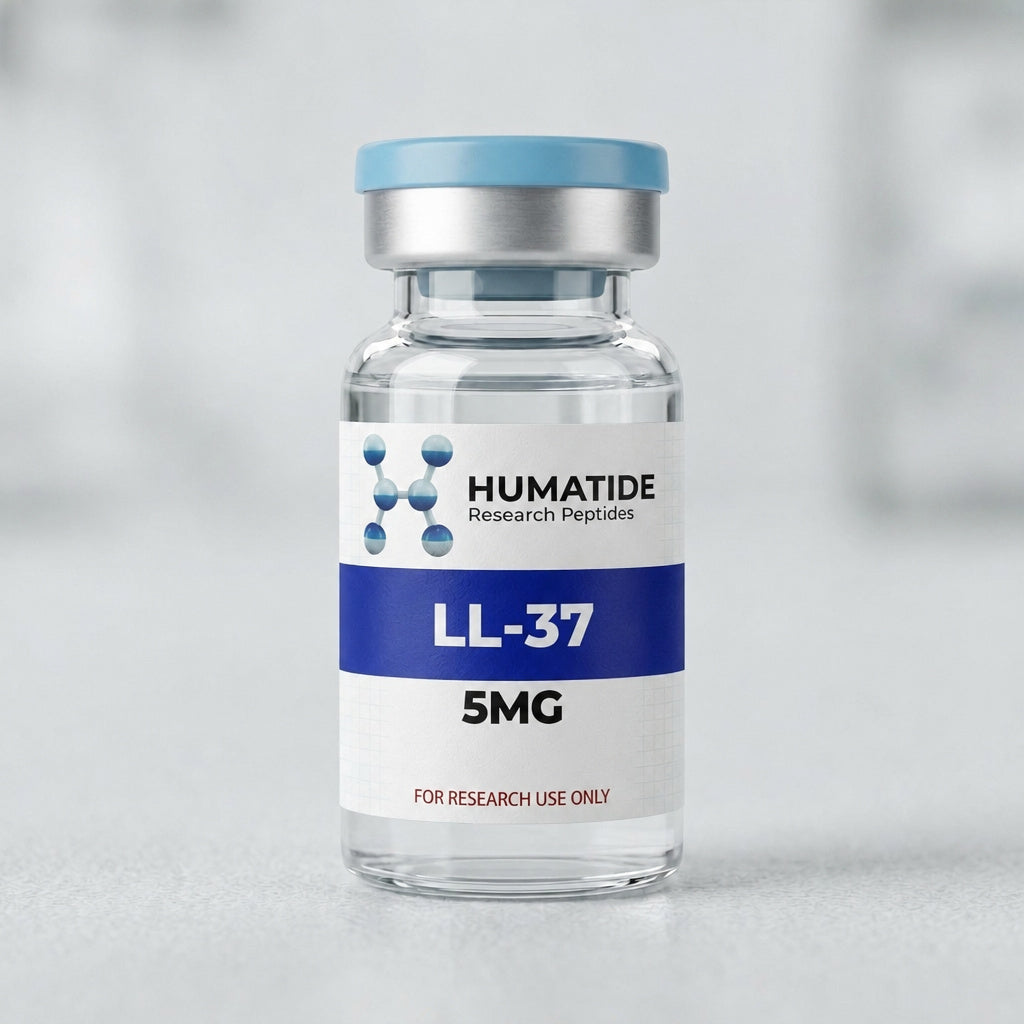
LL-37 Research
What is the research background of LL-37?
LL-37 was first discovered as a class of cationic small peptide substances in the pupae of the silkworm Samia cynthia ricini by the Swedish scientist Boman H G in 1980. LL-37 is the C-terminal peptide (CAMP, hCAP18) of human cathelicidin antibacterial peptide, which can increase the resistance to microbial invasion and plays important physiological functions in chemotaxis, promoting wound closure, and angiogenesis (Chen X, 2018). Antibacterial peptides are widely present in animals, plants, and a small amount of microorganisms, and they are an important part of the innate immunity of vertebrates. As a secretory protein, LL-37 is widely present in multiple organs and tissues of the human body. Various cells, including epithelial cells, keratinocytes, mast cells, neutrophils, macrophages, and monocytes, can secrete it. Most of this kind of antibiotic contains 37 - 39 "amino acid residues" and has 0 cysteine. Due to the strong basicity at the N-terminal position of the antibacterial peptide, it can form a stable "amphiphilic helical structure". The antibacterial peptide LL-37 also has an "amphiphilic α-helical structure". Because of its function of killing pathogenic bacteria, it is named an antibacterial peptide. The "37" in the name LL-37 may be related to the number of its amino acid residues. At the same time, it is also known as cathelicidin and ropocamptide.
What is the mechanism of action of LL-37 against antibiotic-resistant bacteria?
Disrupting the bacterial cell membrane:
LL-37 can insert into the bacterial cell membrane, especially having a destructive effect on the cell membrane containing phosphatidylglycerol (DPPG). It will disrupt the structure of the bacterial cell membrane, thus exerting a bactericidal effect[1]. For example, studies have found that LL-37 can insert into the cell membranes of both Gram-positive and Gram-negative bacteria, leading to an increase in the permeability of the cell membrane, the leakage of cell contents, and ultimately the death of bacteria.
Broad-spectrum antibacterial activity:
LL-37 has antibacterial activity against a variety of antibiotic-resistant bacteria. It can act against Gram-positive bacteria (such as Staphylococcus aureus, Streptococcus, Enterococcus, etc.), Gram-negative bacteria (such as Pseudomonas aeruginosa, Escherichia coli, Salmonella, etc.), and other bacterial pathogens (such as Mycoplasma, Ureaplasma, Mycobacterium, etc.)[2]. This broad-spectrum antibacterial activity makes LL-37 have potential application value in combating different types of antibiotic-resistant bacteria.
Destroying the formed biofilm:
Bacterial biofilm is one of the important reasons for the drug resistance of pathogenic bacteria. The antibacterial peptide LL-37 can destroy the formed biofilm, thus reducing the drug resistance of bacteria. For example, in the prosthetic joint infection (PJI) after artificial joint replacement, the drug resistance of pathogenic bacteria caused by the bacterial biofilm makes the treatment difficult. However, LL-37 can play an effective antibacterial and bacteriostatic role by inhibiting the formation of the biofilm and destroying the formed biofilm.
Enhancing the antibacterial activity of antibiotics:
Studies have shown that LL-37 has a synergistic effect with certain antibiotics. For example, when used in combination with amoxicillin clavulanic acid (AMC), LL-37 can strongly enhance the antibacterial activity of AMC.

Source:PubMed[6]
What are the applications for LL-37?
Promoting bone regeneration:
Some studies have shown that the antibacterial peptide LL-37 has a positive effect on bone regeneration. Some research has shown that human adipose-derived mesenchymal stem cells (hADSCs) were cultured with different concentrations of LL-37, and it was found that the concentration of LL-37 had an impact on the osteogenic ability of hADSCs, reaching a peak at 4μg/ml. In addition, the PSeD/hADSCs/LL-37 combination scaffold showed more superior osteogenic properties than the PSeD/hADSCs, PSeD, and control group scaffolds in the rat calvarial defect model, indicating a high potential in clinical bone regeneration.
Antibacterial effect:
Inhibition of multiple pathogenic bacteria:
Some research used the micro-double dilution method to determine the minimum inhibitory concentration (MIC) of the antibacterial peptide LL-37 against Escherichia coli, Salmonella, and Staphylococcus aureus. The results showed that LL-37 had different degrees of inhibitory effects on these three pathogenic bacteria, with the minimum inhibitory concentrations being 3.12, 1.56, and 0.78μg/mL, respectively. The thermal stability test showed that the recombinant antibacterial peptide still had good activity at high temperatures. The acid-base stability test results showed that LL-37 had certain activity at a pH range of 2.0 to 12.0, with the best activity at a pH of 5.0 to 6.0, and -20°C being the best condition for long-term storage[3].
Effect on antibiotic-resistant bacteria:
Some people studied the antibacterial efficacy of the antibacterial peptide LL-37 and silver nanoparticles (AgNPs) against Staphylococcus aureus (S. aureus), a microorganism commonly found in biofilm-related infections. The results showed that LL-37 was the most effective antibacterial agent, with a reduction in colony count of more than 4 logarithms. In contrast, the effects of silver nanoparticles and conventional antibiotics were poorer, with a reduction in colony count of less than 1 logarithm. The antibacterial combination treatment with rifampicin significantly increased the logarithmic reduction of AgNPs and gentamicin, but it was still significantly lower than that of LL-37 used alone[4].
Application in pulmonary infection:
Studies have shown that Pseudomonas aeruginosa (PA) has become an urgent challenge for pulmonary infection and lung injury. The LL37 peptide is an effective antibacterial agent against PA strains, but its application is limited due to its rapid clearance in vivo, biosafety issues, and low bioavailability. Therefore, a reducing-sensitive albumin-based nanodrug delivery system has been developed to improve the performance of LL37 against PA in vivo by forming intermolecular disulfide bonds. Cationic LL37 can be effectively encapsulated through electrostatic interaction to exert an improved antibacterial effect. The LL37 peptide showed a sustained release of more than 48 hours from the LL37 peptide nanoparticles (LL37 PNP), and an extended antibacterial effect was noted with the increase in the incubation time. In a mouse model of acute PA pulmonary infection, LL37 PNP significantly reduced the expression of TNF-α and IL-1β and alleviated lung injury. It indicates that LL37 PNP can more effectively improve PA pulmonary infection and the subsequent inflammatory response than the free LL37 peptide[3].
Activating the antibacterial function of platelets:
Studies have pointed out that the antibacterial peptide LL-37 can activate the antibacterial function of human platelets. After platelets are treated with LL-37, the surface expression of receptors for recognizing microorganisms (Toll-like receptors (TLRs) 2 and -4, CD32, CD206, Dectin-1, CD35, LOX-1, CD41, CD62P, and αIIbβ3 integrin) and molecules related to presenting antigens to T lymphocytes (CD80, CD86, and HLA-ABC) is increased, and antibacterial molecules are secreted: bactericidal/permeability-increasing protein (BPI), azurocidin, human neutrophil peptide (HNP)-1, and myeloperoxidase. They also translate azurocidin and enhance the binding to Escherichia coli, Staphylococcus aureus, and Candida albicans. In addition, the supernatant of platelets treated with LL-37 can inhibit the growth of Escherichia coli, or platelets can use their LL-37 to inhibit microbial growth[5].
Application in drug delivery systems
Studies have mentioned that antibacterial peptides (AMPs) are a new class of biomolecules with broad-spectrum antibacterial properties and have attracted attention due to the rapid increase in antibiotic resistance[6]. LL37 is the only cathelicidin-derived antibacterial peptide found in humans. With in-depth research, LL37 has shown various biological functions, including regulating the inflammatory response, chemotaxis of immune cells, promoting wound healing, and osteogenesis, which have encouraged a variety of clinical applications. However, the clinical translation of LL37 is limited by its sensitivity to protease degradation, potential toxicity, poor bioavailability, etc. Various delivery systems, including metal nanoparticles, polymer materials, and lipid-based systems, have been introduced to achieve therapeutic applications.
In conclusion, as a multifunctional bioactive peptide, LL-37 has shown great potential in clinical applications. In terms of promoting bone regeneration, through the synergistic effects of multiple mechanisms such as promoting osteoblast differentiation and activity, antibacterial effects, immunomodulation, and promoting angiogenesis, it has brought new hope for bone injury repair. When dealing with antibiotic-resistant bacteria, by directly destroying the cell membrane, inhibiting the formation of biofilms, and synergizing with antibiotics, it is expected to become a powerful weapon to solve the problem of drug-resistant bacteria. In drug delivery systems, by designing and optimizing antibacterial peptide templates, constructing multiple drug delivery systems, and exploring the combined application of drugs, its clinical treatment effect can be further enhanced. In short, LL-37 has potential in multiple aspects of clinical applications, including promoting bone regeneration, antibacterial effects, activating the antibacterial function of platelets, and applications in drug delivery systems.
For Research Use Only
This compound is provided exclusively for in vitro laboratory research. It is not intended for human or animal consumption, diagnosis, treatment, or medical use. Not for dietary, cosmetic, or veterinary purposes. This product has not been evaluated by the U.S. Food and Drug Administration or any other regulatory authority.
Disclaimer
All information is for educational purposes only. Humatide makes no claims regarding efficacy or safety. Purchasers are responsible for ensuring proper handling and use in compliance with all applicable laws and regulations.
Terms of Sale
By purchasing from Humatide, you confirm that you are a qualified researcher with the knowledge and facilities to safely handle and store research chemicals. All sales are final. Humatide assumes no liability for misuse, misrepresentation, or unintended consequences arising from the use of this product.
ALL ARTICLES AND PRODUCT INFORMATION PROVIDED ON THIS WEBSITE ARE SOLELY FOR INFORMATION DISSEMINATION AND EDUCATIONAL PURPOSES.
The products provided on this website are intended exclusively for in vitro research. In vitro research (Latin: *in glass*, meaning in glassware) is conducted outside the human body. These products are not pharmaceuticals, have not been approved by the U.S. Food and Drug Administration (FDA), and must not be used to prevent, treat, or cure any medical condition, disease, or ailment. It is strictly prohibited by law to introduce these products into the human or animal body in any form.
Polypeptide Purity Control and Verification Technical System
Humatide.com provides peptides with purity exceeding 99%. Humatide achieves precise control and scientific verification of polypeptide purity by integrating advanced technologies and a full-process quality control system: In the synthesis stage, automated solid-phase peptide synthesis (SPPS) is employed to accurately assemble amino acid sequences. A gradient purification strategy ranging from medium-pressure liquid chromatography (MPLC) to preparative high-performance liquid chromatography (Prep-HPLC) is utilized, optimizing mobile phase composition and elution conditions based on the physicochemical properties of the target peptide (hydrophobicity, charge distribution, etc.) to efficiently remove impurities. For purity detection, reverse-phase high-performance liquid chromatography (RP-HPLC) serves as the core technique, separating components through the distribution difference of molecules between the stationary phase (hydrophobic packing) and the mobile phase (polar solvent). Purity is determined via retention time matching and peak area normalization. Meanwhile, electrospray ionization mass spectrometry (ESI-MS) is combined to precisely verify the molecular weight and composition through mass-to-charge ratio (m/z) analysis, eliminating structurally heterogeneous impurities. Quality management covers the entire chain from raw material acceptance, synthesis process monitoring to finished product release. A continuous quality fingerprint is constructed using multi-dimensional indicators (HPLC purity, MS molecular weight, solvent residue, etc.), and batch data traceability is achieved through a laboratory information management system (LIMS), ensuring each batch meets the prespecified purity standards. This system provides a reliable technical guarantee for preparing high-purity polypeptides through the organic integration of process optimization, multi-dimensional detection, and full-process quality control.
Concepts of High-Performance Liquid Chromatography (HPLC) and Mass Spectrometry (MS)
High-performance liquid chromatography (HPLC) is a separation technology widely used by Humatide for peptide purification. Driven by a high-pressure pump, the mobile phase carries samples through a chromatographic column packed with a specific stationary phase, achieving separation based on differences in the distribution coefficients of components between the two phases. It features high separation efficiency, fast analysis speed, and strong detection sensitivity, enabling precise capture of subtle differences between target peptides and impurities such as sequence analogs or deletion peptides.
Mass spectrometry (MS) is an analytical method that converts peptide molecules into gas-phase ions through ionization technology and separates/detects ions based on their mass-to-charge ratio (m/z). It can accurately determine the molecular weight of peptides and infer amino acid sequences through fragment ion information, serving as a key technology for verifying peptide structural correctness. The combination of these two techniques allows Humatide to establish a complete quality control system from both purity separation and structural confirmation perspectives. Both methods are high-precision peptide detection technologies that scientifically demonstrate the purity and composition of peptides ordered from Humatide.com.
Humatide is committed to translating cutting-edge analytical technologies into tangible quality assurance. Our peptide synthesis laboratories are equipped with high-resolution mass spectrometers and ultra-high-performance liquid chromatography systems. Through real-time detection and data comparison of samples at each production stage, we continuously optimize synthesis processes to ensure every peptide product is delivered to customers with exceptional purity.
Recommended Peptide Purity Levels
Humatide provides only the highest-purity peptides (purity ≥99%) for research and development. The minimum recommended peptide purity level for specific applications depends on the application:
• In biochemical research, peptides used for enzyme activity analysis typically require ≥85% purity.
• In drug development, peptides for preclinical trials must meet >98% high-purity standards to ensure biological activity and safety.
• For diagnostic applications (e.g., antigen peptides in immunoassays), recommended purity is 90%-95% to guarantee detection specificity and sensitivity.
Humatide is confident in the quality of all our products, implementing strict quality monitoring at every stage of peptide synthesis—from crude peptide purification to final product release. Through multi-step purification and verification processes, we ensure each batch meets or exceeds the purity requirements for specific applications. Examples of acceptable minimum purity levels are as follows:
High Purity (>95%)
• Polypeptide drug research and production
• Preparation of targeted therapeutic drugs
• Raw materials for biological diagnostic reagents (e.g., ELISA, immunoassay kits)
• Development of polypeptide vaccines (therapeutic/preventive)
• Preparation of targeting peptides for antibody-drug conjugates (ADCs)
• Polypeptide reagents for life science research (e.g., receptor agonists/antagonists)
• Research on targeting peptide modification for gene therapy vectors
• Development of polypeptide antibiotics/antimicrobial peptides
• Preparation of polypeptide hormone analogs (e.g., insulin analogs)
• Reference standards for biomarker detection
• Research on cell culture additives
• Synthetic peptides for protein structure analysis and functional studies
Moderate Purity (>85%)
• Early-stage activity screening in polypeptide drug research
• Peptide additives for industrial enzymes
• Signal peptide raw materials
• Surface modification of biomaterials (e.g., medical catheters, tissue engineering scaffolds)
• Preparation of agricultural antimicrobial peptides
• Cell adhesion research
• Raw materials for polypeptide surfactants/detergents
• Polypeptide reagents for preliminary mechanistic research in scientific studies
Lower Purity (>70%)
• Preliminary structure-activity relationship (SAR) studies
• Initial verification of protein binding
• Primary cytotoxicity screening
• High-throughput screening of polypeptide drug lead compounds
Please note
**We are not responsible for reconstitution or any issue that arise from it**
High-purity polypeptides are suitable for scenarios requiring strict purity. The ultra-high-purity peptides provided by Humatide can meet and exceed all prespecified purity standards.
To View the latest Certificate of Analysis (CoA) click the "View Latest 3rd Party Certificate of Analysis" button on the product page. Please use that if you are looking to buy as that is the batch you'll receive if you place an order. The QRCode will give you the Batch ID/Lot Number which is matched on the CoA to validate that CoA matches your specific vial. If you happen to get a vial that is from a previous batch select the "Previous Batch 3rd Party Certificate of Analysis" if your Batch ID doesn't match the latest CoA.
All CoA are searchable via the respective testers' website.
ILS Labs Verification is available on their website at:
To validate the CoA on the ILS Labs website enter the Access Code that is located on the bottom of the CoA that is shown on our website.
We also use MDx Biolabs, verification is available via their website at:
https://mdxbiolabs.com/certificates-of-analysis
To find validate the CoA on the MDx Biolabs website enter the COA number which is located at the bottom of the CoA that is shown on our website.

Be the first to know about new products, sales, and exclusive offers.