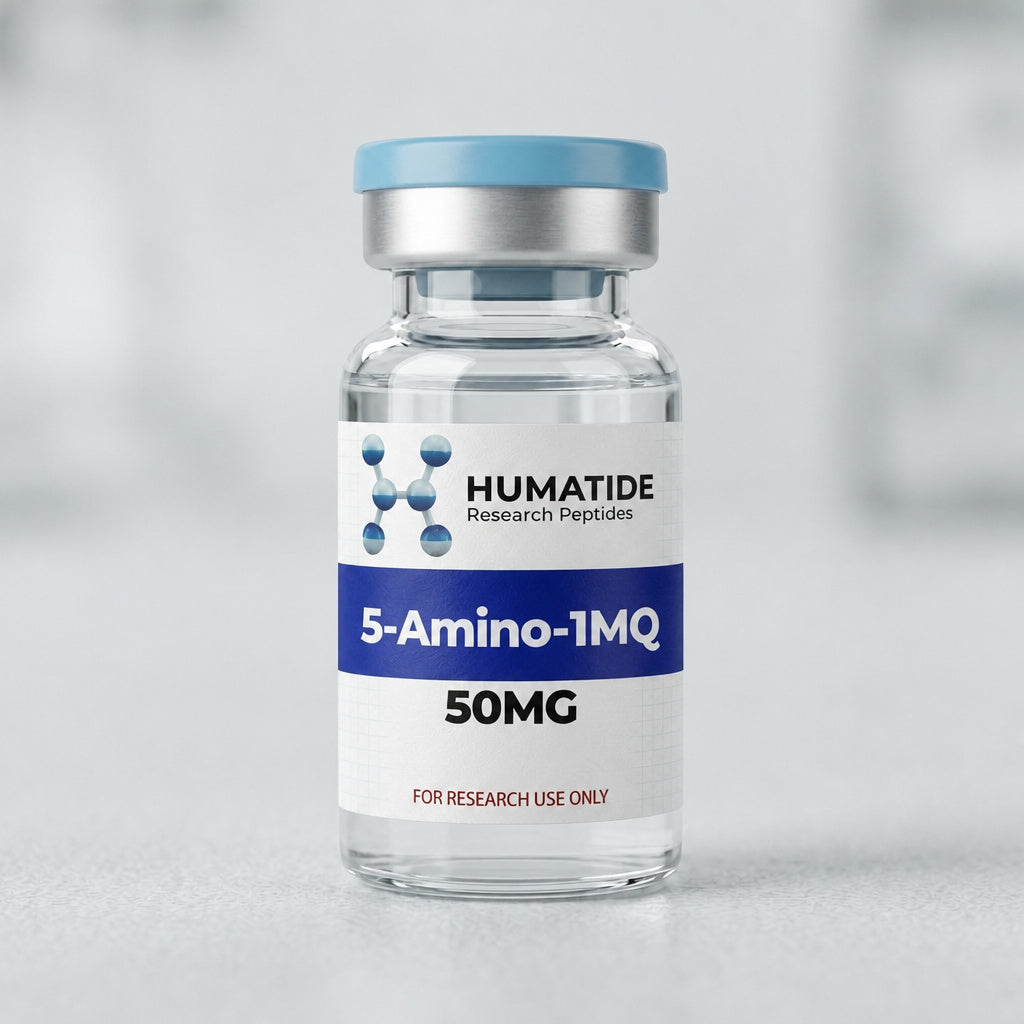
5-Amino-1MQ

$75
5-Amino-1MQ: 50MG
127 pieces in stock

5-Amino-1MQ Product Description

5-Amino-1MQ is a synthetic compound that inhibits the enzyme nicotinamide N-methyltransferase (NNMT). By blocking this enzyme, it modulates cellular NAD+ and SAM levels, which affects energy production and fat metabolism pathways in experimental models.

Preclinical research in laboratory settings demonstrates effects on weight-related processes, muscle tissue preservation, mitochondrial function, and cellular aging mechanisms. This methylquinolinium derivative represents a research compound of interest for fundamental studies of metabolic processes and cellular longevity mechanisms.

Peptide Information

Property Value
Peptide Sequence N/A
Molecular Formula C10H11N2+
Molecular Weight 159.21 g/mol
CAS Number 685079-15-6
PubChem CID 950107
Synonyms 5-amino-1-methylquinolinium;PMX593N4N3


5-Amino-1MQ Research

What is the research background of 5-Amino-1MQ?

Within the evolving field of metabolic health and longevity research, identifying effective interventions to address metabolic disorders and delay aging remains a central scientific focus. Nicotinamide N-methyltransferase (NNMT) exhibits high activity in adipose tissue and liver. By methylating nicotinamide, it reduces its conversion to nicotinamide adenine dinucleotide (NAD⁺). NAD⁺ is crucial for cellular basal metabolism, energy production, DNA repair, and signaling pathways. Maintaining its optimal levels is vital for cellular health and combating aging and metabolic dysfunction. In 2017, researchers at the University of Texas first investigated 5-Amino-1MQ while seeking methods to inhibit NNMT. Given NNMT's strong association with obesity and type 2 diabetes, the researchers hypothesized that blocking NNMT could potentially open new avenues for treating obesity and its metabolic complications. This formed the critical backdrop for the 5-Amino-1MQ research.

What is the mechanism of action for 5-Amino-1MQ?

Inhibiting cervical cancer cell proliferation: 5MQ is a small-molecule inhibitor of nicotinamide N-methyltransferase (NNMT) that exhibits significant antiproliferative effects on the HeLa epithelial cervical carcinoma cell line, with this effect being concentration- and time-dependent. NNMT is a metabolic enzyme associated with tumor progression and metastasis. By inhibiting NNMT, 5MQ likely disrupts a series of intracellular metabolic pathways linked to tumor growth. For instance, 5MQ may interfere with nicotinamide metabolism-related signaling pathways. Imbalances in nicotinamide metabolism could further impact cellular energy metabolism, DNA repair, and other processes, thereby suppressing cancer cell proliferation. In experiments, as 5MQ concentration increased and treatment duration extended, HeLa cell proliferation exhibited progressively pronounced inhibition. Concurrently, morphological changes including cell shrinkage, loss of intercellular adhesion, and apoptotic bodies were observed, indicating that 5MQ induces apoptosis, thereby suppressing cell proliferation [1].

Regulation of Related Gene and Protein Expression: Following 5MQ treatment of HeLa cells, mRNA levels of ZEB1, SIRT1, and CD16 increased, while TWIST and SERPIN1 mRNA levels decreased. Concurrently, expression of the oncogenic proteins phospho-Akt and SIRT1 diminished. These genes and proteins play crucial roles in tumorigenesis and progression. For instance, TWIST and SERPIN1 are typically associated with tumor invasion and metastasis. By reducing their expression, 5MQ may suppress the invasive and metastatic capabilities of HeLa cells. Although mRNA levels of ZEB1 and SIRT1 increased, the expression of the oncogenic protein SIRT1 decreased. This may occur because 5MQ affects post-transcriptional regulation, inhibiting SIRT1 protein function and thereby affecting cell proliferation and survival. Phosphorylated Akt plays a crucial role in cell survival, proliferation, and metabolic regulation. 5MQ's reduction in its expression may inhibit cancer cell proliferation and survival by blocking related signaling pathways[1].

What are the applications of 5-Amino-1MQ?

In metabolic health research, its core function is to restore cellular metabolic balance by inhibiting NNMT. NNMT consumes nicotinamide (a precursor of NAD⁺) and impacts methyl donor metabolism, while 5-Amino-1MQ blocks this process: on one hand, it reduces nicotinamide methylation consumption in adipocytes, elevating intracellular NAD⁺ levels to activate NAD⁺-dependent longevity genes (such as SIRT1) and optimize mitochondrial function— a process that promotes lipolysis, inhibits lipogenesis, helps regulate energy metabolism in adipose tissue, and reduces excess fat accumulation. On the other hand, it also alleviates insulin resistance commonly seen in metabolic disorders by improving insulin signaling pathway sensitivity, while potentially indirectly regulating hepatic gluconeogenesis to assist in maintaining stable blood glucose levels. Furthermore, its potential impact on gut microbiota is under investigation, with speculation that it may indirectly support overall metabolic homeostasis by regulating microbial metabolic activity (e.g., reducing harmful metabolite production).

In cancer research, its application focuses on targeting the “metabolic vulnerability” of tumor cells. To sustain rapid proliferation, tumor cells often rely on abnormally active metabolic pathways (such as the Warburg effect), and NNMT is highly expressed in some tumor cells, supporting their metabolism. By inhibiting NNMT, 5-Amino-1MQ disrupts tumor cell metabolism in two ways: First, it reduces intracellular NAD⁺ levels, impairing energy production, leading to insufficient energy and biosynthetic substrates required for proliferation; Second, it impairs the utilization of methyl donors, disrupting epigenetic regulatory processes like DNA methylation in tumor cells, thereby suppressing gene expression associated with proliferation and metastasis. Additionally, it may indirectly inhibit tumor growth and spread by modulating metabolic factors in the tumor microenvironment, providing a basis for exploring tumor metabolic intervention strategies.

As a fundamental research tool, it serves as a key method for deciphering NNMT's physiological functions. Researchers can precisely block NNMT activity using 5-Amino-1MQ in cellular or animal models to observe subsequent changes in metabolic indicators. For instance, in cellular experiments, monitoring NAD⁺ concentrations, methyl donor levels, and the activity of enzymes involved in fatty acid synthesis can clarify NNMT's specific role in cellular metabolism. In animal models, combined with tissue-specific sample analysis, it enables exploration of NNMT's tissue-specific functions—such as its impact on hepatic metabolism during aging or its regulation of energy supply in neurons. Furthermore, leveraging the differential responses across cell lines (e.g., normal cells showing low sensitivity versus pronounced responses in metabolically abnormal or tumor cells) can aid in deciphering specific cellular metabolic mechanisms, guiding subsequent targeted research.

In the domains of muscle health and cognition, its application centers on the “energy metabolism - cellular function” relationship. In muscle health research, muscle repair relies on the activation and proliferation of satellite cells, a process requiring adequate energy supply. —5-Amino-1MQ promotes satellite cell activation by maintaining intracellular NAD⁺ levels in muscle cells. Simultaneously, it optimizes mitochondrial function to enhance muscle energy metabolism efficiency, alleviating recovery stress post-muscle injury. It may also reduce oxidative stress in muscle tissue, protecting cells from damage caused by excessive metabolic byproducts. In cognitive research, brain neurons exhibit extremely high energy demands, and declining NAD⁺ levels correlate with neural function decline. 5-Amino-1MQ preserves neuronal NAD⁺ supply by inhibiting NNMT, thereby safeguarding mitochondrial function and reducing neuroinflammation. It may also influence neurotransmitter metabolism (via NAD⁺-dependent enzymes involved in neurotransmitter synthesis) to support cognitive-related neuronal activity (e.g., cellular function in learning/memory regions like the hippocampus), offering novel perspectives for cognitive function maintenance research.

Conclusion

As a specific inhibitor of nicotinamide N-methyltransferase (NNMT), 5-Amino-1MQ demonstrates core value across multiple domains by targeting NNMT-regulated metabolic pathways. It can improve obesity and insulin resistance by maintaining NAD⁺ levels, optimizing mitochondrial function, and restoring metabolic balance. It also targets metabolic vulnerabilities in tumor cells, disrupting their energy production and epigenetic regulation to inhibit tumor growth. Furthermore, it serves as a research tool for elucidating NNMT function while demonstrating potential roles in muscle repair and cognitive maintenance, providing key directions for intervention studies in metabolic diseases, cancer, and related conditions.

Relevant Citations

[1] Akar S, Duran T, Azzawri AA, Koçak N, Çelik Ç, Yıldırım Hİ. Small molecule inhibitor of nicotinamide N-methyltransferase shows  anti-proliferative activity in HeLa cells. Journal of Obstetrics and Gynaecology 2021; 41(8): 1240-1245.

For Research Use Only
This compound is provided exclusively for in vitro laboratory research. It is not intended for human or animal consumption, diagnosis, treatment, or medical use. Not for dietary, cosmetic, or veterinary purposes. This product has not been evaluated by the U.S. Food and Drug Administration or any other regulatory authority.


Disclaimer
All information is for educational purposes only. Humatide makes no claims regarding efficacy or safety. Purchasers are responsible for ensuring proper handling and use in compliance with all applicable laws and regulations.


Terms of Sale
By purchasing from Humatide, you confirm that you are a qualified researcher with the knowledge and facilities to safely handle and store research chemicals. All sales are final. Humatide assumes no liability for misuse, misrepresentation, or unintended consequences arising from the use of this product.

ALL ARTICLES AND PRODUCT INFORMATION PROVIDED ON THIS WEBSITE ARE SOLELY FOR INFORMATION DISSEMINATION AND EDUCATIONAL PURPOSES.

The products provided on this website are intended exclusively for in vitro research. In vitro research (Latin: *in glass*, meaning in glassware) is conducted outside the human body. These products are not pharmaceuticals, have not been approved by the U.S. Food and Drug Administration (FDA), and must not be used to prevent, treat, or cure any medical condition, disease, or ailment. It is strictly prohibited by law to introduce these products into the human or animal body in any form.


Polypeptide Purity Control and Verification Technical System

Humatide.com provides peptides with purity exceeding 99%. Humatide achieves precise control and scientific verification of polypeptide purity by integrating advanced technologies and a full-process quality control system: In the synthesis stage, automated solid-phase peptide synthesis (SPPS) is employed to accurately assemble amino acid sequences. A gradient purification strategy ranging from medium-pressure liquid chromatography (MPLC) to preparative high-performance liquid chromatography (Prep-HPLC) is utilized, optimizing mobile phase composition and elution conditions based on the physicochemical properties of the target peptide (hydrophobicity, charge distribution, etc.) to efficiently remove impurities. For purity detection, reverse-phase high-performance liquid chromatography (RP-HPLC) serves as the core technique, separating components through the distribution difference of molecules between the stationary phase (hydrophobic packing) and the mobile phase (polar solvent). Purity is determined via retention time matching and peak area normalization. Meanwhile, electrospray ionization mass spectrometry (ESI-MS) is combined to precisely verify the molecular weight and composition through mass-to-charge ratio (m/z) analysis, eliminating structurally heterogeneous impurities. Quality management covers the entire chain from raw material acceptance, synthesis process monitoring to finished product release. A continuous quality fingerprint is constructed using multi-dimensional indicators (HPLC purity, MS molecular weight, solvent residue, etc.), and batch data traceability is achieved through a laboratory information management system (LIMS), ensuring each batch meets the prespecified purity standards. This system provides a reliable technical guarantee for preparing high-purity polypeptides through the organic integration of process optimization, multi-dimensional detection, and full-process quality control.


Concepts of High-Performance Liquid Chromatography (HPLC) and Mass Spectrometry (MS)

High-performance liquid chromatography (HPLC) is a separation technology widely used by Humatide for peptide purification. Driven by a high-pressure pump, the mobile phase carries samples through a chromatographic column packed with a specific stationary phase, achieving separation based on differences in the distribution coefficients of components between the two phases. It features high separation efficiency, fast analysis speed, and strong detection sensitivity, enabling precise capture of subtle differences between target peptides and impurities such as sequence analogs or deletion peptides.

Mass spectrometry (MS) is an analytical method that converts peptide molecules into gas-phase ions through ionization technology and separates/detects ions based on their mass-to-charge ratio (m/z). It can accurately determine the molecular weight of peptides and infer amino acid sequences through fragment ion information, serving as a key technology for verifying peptide structural correctness. The combination of these two techniques allows Humatide to establish a complete quality control system from both purity separation and structural confirmation perspectives. Both methods are high-precision peptide detection technologies that scientifically demonstrate the purity and composition of peptides ordered from Humatide.com.

Humatide is committed to translating cutting-edge analytical technologies into tangible quality assurance. Our peptide synthesis laboratories are equipped with high-resolution mass spectrometers and ultra-high-performance liquid chromatography systems. Through real-time detection and data comparison of samples at each production stage, we continuously optimize synthesis processes to ensure every peptide product is delivered to customers with exceptional purity.


Recommended Peptide Purity Levels

Humatide provides only the highest-purity peptides (purity ≥99%) for research and development. The minimum recommended peptide purity level for specific applications depends on the application:

• In biochemical research, peptides used for enzyme activity analysis typically require ≥85% purity.

• In drug development, peptides for preclinical trials must meet >98% high-purity standards to ensure biological activity and safety.

• For diagnostic applications (e.g., antigen peptides in immunoassays), recommended purity is 90%-95% to guarantee detection specificity and sensitivity.

Humatide is confident in the quality of all our products, implementing strict quality monitoring at every stage of peptide synthesis—from crude peptide purification to final product release. Through multi-step purification and verification processes, we ensure each batch meets or exceeds the purity requirements for specific applications. Examples of acceptable minimum purity levels are as follows:


High Purity (>95%)

• Polypeptide drug research and production

• Preparation of targeted therapeutic drugs

• Raw materials for biological diagnostic reagents (e.g., ELISA, immunoassay kits)

• Development of polypeptide vaccines (therapeutic/preventive)

• Preparation of targeting peptides for antibody-drug conjugates (ADCs)

• Polypeptide reagents for life science research (e.g., receptor agonists/antagonists)

• Research on targeting peptide modification for gene therapy vectors

• Development of polypeptide antibiotics/antimicrobial peptides

• Preparation of polypeptide hormone analogs (e.g., insulin analogs)

• Reference standards for biomarker detection

• Research on cell culture additives

• Synthetic peptides for protein structure analysis and functional studies


Moderate Purity (>85%)

• Early-stage activity screening in polypeptide drug research

• Peptide additives for industrial enzymes

• Signal peptide raw materials

• Surface modification of biomaterials (e.g., medical catheters, tissue engineering scaffolds)

• Preparation of agricultural antimicrobial peptides

• Cell adhesion research

• Raw materials for polypeptide surfactants/detergents

• Polypeptide reagents for preliminary mechanistic research in scientific studies


Lower Purity (>70%)

• Preliminary structure-activity relationship (SAR) studies

• Initial verification of protein binding

• Primary cytotoxicity screening

• High-throughput screening of polypeptide drug lead compounds


Please note

**We are not responsible for reconstitution or any issue that arise from it**


High-purity polypeptides are suitable for scenarios requiring strict purity. The ultra-high-purity peptides provided by Humatide can meet and exceed all prespecified purity standards.

Humatide Shipping & Delivery

Shipping Methods & Delivery Times

Standard handling is 24 hours excluding Holidays and Weekends

International Shipping – Not available at this time.

The explained transit time are not guaranteed.  Humatide is not responsible nor will refunds be given due to transit delays.

Order Tracking

Once your order has shipped, you’ll receive an email with a tracking number and link.
If you experience any tracking issues, reach out to us at help@humatide.com.

Shipping Issues

If your order arrives damaged, incorrect, or incomplete, contact us within 48 hours of delivery at help@humatide.com.  Please have photos available to expedite inquires.  We’ll make it right with a replacement or refund.

Carrier Delays

Humatide is not responsible for delivery delays caused by:

  • Severe weather
  • Carrier errors
  • Events outside our control
  • Extended transit times in rural areas
  • Holidays

Address Accuracy

Please double-check your shipping address during checkout.
We are not responsible for orders delayed or lost due to incomplete or incorrect addresses.

Delivery Confirmation

If tracking shows your package as delivered but you haven’t received it:

Contact UPS directly.

We’re happy to assist with a carrier claim, but Humatide is not liable for lost or stolen packages after confirmed delivery.

Returns & Exchanges

Refund Policy
Due to the sensitive nature of research products, all sales are final.
We cannot accept returns or issue refunds once an order has been shipped. This policy helps ensure product integrity and safety for all of our research partners.

Damaged or Defective Items

If your order is damaged and you declined shipping protection we can only provide you with up to $100 in store credit.  If you did select shipment protection we will replace any damaged good and ship out replacements at no cost.  If your order is incorrect, or missing items, please contact us within 48 hours of delivery so we can resolve the issue.  Please provide photos of the damaged items.

Lost or Stolen Shipments

If your order is lost or stolen and you declined shipping protection the maximum credit we can give you is $100 in store credit.  If you did select shipment protection we will replace the entire order if it's been lost at no charge if it is lost or stolen.  Please contact us within 48 hours of delivery so we can work with UPS to help resolve the issue.  

Final Sale Items

All sales are final and products are not eligible for return or exchange. 

Need Help?

We’re here to help.
Contact our support team anytime at help@humatide.com with any questions about shipping or returns.

To View the latest Certificate of Analysis (CoA) click the "View Latest 3rd Party Certificate of Analysis" button on the product page.  Please use that if you are looking to buy as that is the batch you'll receive if you place an order.  The QRCode will give you the Batch ID/Lot Number which is matched on the CoA to validate that CoA matches your specific vial.  If you happen to get a vial that is from a previous batch select the "Previous Batch 3rd Party Certificate of Analysis" if your Batch ID doesn't match the latest CoA.   

All CoA are searchable via the respective testers' website. 

ILS Labs Verification is available on their website at:  

https://ils-lab.com/verify

To validate the CoA on the ILS Labs website enter the Access Code that is located on the bottom of the CoA that is shown on our website.   

We also use MDx Biolabs, verification is available via their website at:  

https://mdxbiolabs.com/certificates-of-analysis

To find validate the CoA on the MDx Biolabs website enter the COA number which is located at the bottom of the CoA that is shown on our website.  


5-Amino-1MQ
5-Amino-1MQ
50MG
$75

Recently viewed